


How many hours per week does the climate action plan workshop require to complete successfully? The time investment required is only 1 to 1-1/2 hours per week.
The first assignment involves meeting with a small group of people to get a sense of what climate challenges community members are facing due to global warming. So, that will take more than an hour, but you have three weeks to complete the first assignment.
What is the duration of the workshop? The workshop lasts for 8 weeks.
Is there interaction between the course instructor and the student? Yes, each weekly activity turned in by a participant is carefully read by the instructor. They will make constructive suggestions for each assignment. Students are encouraged to communicate by email with the instructor during the duration of the course with comments or questions.
There is also a weekly Zoom meeting with participants so that they can ask questions about their specific project.
Is there any prior climate expertise needed? The workshop’s training materials have been designed to be accessible to a broad range of people. There is no climate action expertise needed to enjoy full participation in the program.
Will I need to purchase any books prior to the course? No, there are no additional costs beyond the course fee. You will not need to purchase any books prior to, during, or after the course. All the information you will need can be found at the website.
A Field Guide to Community Based Adaptation, written by the instructor, Tim Magee, is provided as a PDF for each participant.
Team collaboration & remote participation. If you’re joining the workshop as part of a team, most collaboration is done by e-mail and Zoom calls. As a team, one person will be designated as the person to hand in the weekly assignments each week. Each of the teammates needs to work on the same project together.
Frequently, teams divide an assignment into parts and share them between the teammates. Although one team member will be the instructor’s contact person, all of the teammates are welcome to join in on the weekly Zoom meeting.
Refund Policy. 100% refunds are granted with a written cancellation request received up to 24 hours prior to the start of the course.
Will I get a certificate at the end of the workshop? Yes, course participants who successfully complete a course on time will receive a PDF course certificate
This workshop is led by a live teacher/consultant who will have weekly Zoom meetings with you and your course mates.
They will review each of your weekly activities and provide suggestions to make sure your outputs are actionable and fundable.
This course is also offered as a live workshop—perfect for staff or community members. Please contact us for more information.
$300 per team of up to four teammates.
$125 per individual person.
Instructor-Taught Online
8 Week Program
This pricing includes up to 4 teammates may participate in the course and develop your climate action plan. Each participant has access to all course materials and resources. One group member will be chosen to submit the group assignments.
After enrolling, you will be sent a welcome email with login instructions.
INGOs: Are you with an international NGO working in the Global South? If so, this sister course is a better match for you: International Community Based Adaptation.
Climate Action Plan Workshop resources include:
The instructor-led course includes a complimentary PDF eBook of A Field Guide to Community-Based Adaptation (a $40 value).
The instructor-led course will provide one-on-one instruction in tandem with all of the downloadable course materials listed above. Your instructor will offer professional comments and encouragement for each of your assignments.
Each week we will have a group zoom meeting for questions and discussion.
Certificate: Upon completing the course and all 6 assignments, you will receive a PDF Certificate of Completion.
Refund Policy. 100% refunds are granted with a written cancellation request received up to 24 hours prior to the start of the course.
8 Weeks | Hands-On
This is a program on planning, funding, launching, and managing a climate change action plan with your community.
You will work hand-in-hand with community members in developing a plan to combat climate challenges due to global warming.
The program is designed to help both experienced—and novice—climate change planners create bold climate action plans that prepare communities for climate change. Weekly Zoom Chats will keep it real.
What is a climate action plan? In designing a successful climate change action plan you will:
Each week we will have a group zoom meeting for questions and discussion.
Click the “Questions?” link just below to see a full course syllabus.
Learn by doing. This climate change adaptation program is for actually launching a climate change action plan with a real community.
In 8 weeks you will design a plan complete with solutions for your community’s climate challenges.
This is in preparation for the second course of the program where you will develop a full set of donor documents to present for funding.
Course participants have helped communities in North America, Europe, Australia, and Great Britain be prepared for climate issues magnified by climate change global boiling:
You will learn:
You will see and work with a climate action plan example.
The course will lead you through the design and launch of a similar, real climate change adaptation plan project in your local community.
Do you work in the Global South? This course is a better match.
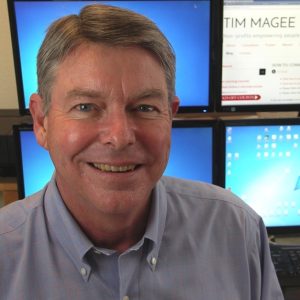
During the past 20+ years, Mr. Magee and his team have worked with 5,000 training participants from nonprofit organizations, local governments and members of rural communities on a wide range of projects and programs helping farmers, ranchers, and rural communities adapt to a changing climate.
These include climate smart agriculture, disaster preparedness, and climate smart action plans.
Tim leads the live Zoom sessions and also provides weekly reviews of your climate action plan’s progress.
He has a background in agriculture, renewable energy, and climate change, and a degree in agriculture from Washington State University, a land-grant extension outreach university.
Mr. Magee is also available for 1) a live workshop with your group to develop your Climate Smart Action Plan or 2) to consult with you one-on-one about your Climate Plan. Contact us here for more information.
The resources include these templates to allow you to progress quickly:
The instructor-led course includes a complimentary PDF eBook of Tim Magee’s A Field Guide to Community-Based Adaptation (a $40 value).
The instructor-led course will provide one-on-one instruction in tandem with all of the downloadable course materials listed above. Your instructor will offer professional comments and encouragement for each of your assignments.
Each week we will have a group zoom meeting for questions and discussion.
Upon completing the course and all 6 assignments, you will receive a PDF Certificate of Completion.
Upon completing Write Your Climate Adaptation Plan, in next six week course you will use your climate adaptation plan’s design to develop the donor documents necessary to seek funding:
You will then have an introductory meeting with one of the traditional funding agencies that work with communities on climate action plans.
Questions? For more information, contact us.
“I just want to take this opportunity to complement you on the practical ideas, knowledge and vast experience that you continue to share with us on each assignment. Many times your examples are the solution of choice for our community. I have been provided with constant support, practical solutions suitable for my project, feedback specific to our project submissions and unwavering encouragement.”
Gillian Primus
“Thank you for all your effort in putting together a great program and all of the program resources. Thank you for everything – for making this possible, for your guidance, and for your continuous optimism and encouragement. I look forward to the opportunity to work with you again in the next session.”
Wye Yee Yong
8 Weeks: What is climate change? Develop a real-life, local climate action plan template. What is a climate action plan?
Week 1. Complete enrollment, meet your teacher, and explore the course resources. You will then have the next 3 weeks for Assignment One.
Week 2 & 3. Conduct a climate change conversation with community members to understand their needs, personal interests—and strengths! What is global warming? Climate resilience? Climate adaptation?
Week 4. Clearly define your community and its overall climate challenge.
Week 5. Learn how to solve the climate challenge using locally-focused climate change solutions.
Week 6. Make sure your plan will work by checking that your climate action solutions have success stories that show a proven track record.
Week 7. Assemble a detailed outline for a local climate action plan in preparation for a donor presentation.
Week 8. Share your project with your community and with a donor for feedback.
Then, enroll in the next course—Fund Your Climate Action Plan—to develop a full set of donor documents:
Each week we will have a group zoom meeting for questions and discussion.
Please contact us with questions.