
Practical Climate Action Training for People, Communities, and the Nonprofits
and Towns That Serve Them
PROVEN, PRACTICAL APPROACH
Get road-tested, affordable, do-it-yourself solutions for a changing climate that you can launch now!
Start today with ‘8 Steps: Cut Your Carbon Footprint 50%.’
By Tim Magee.
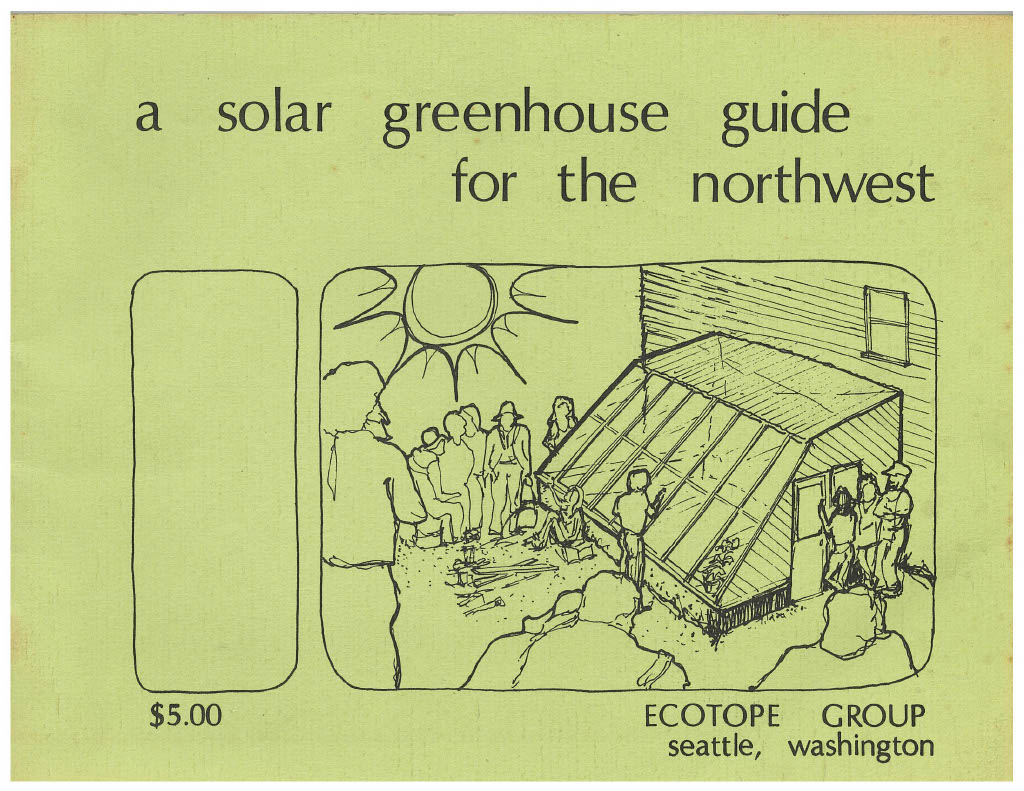
This solar greenhouse guide takes readers through basic design ideas about solar heating both for greenhouses and for home heating. Then it works through a simple process of designing the solar greenhouse that you want to build.
Then it shows you detailed, fully illustrated, step by step, how-to instructions on building your solar greenhouse from scratch, followed by a section on food production.
The Table of Contents Includes:
The Pacific Northwest exhibits a fortunate balance of weather conditions necessary for the successful operation of solar heating systems. The Seattle area, although cloudy during much of December and January, maintains a relatively mild climate due to the blanket effect of the clouds. In this climate, household heating can be inexpensively maintained with passive solar heating backed up with conventional systems using wood, gas, or electricity.
The planting rhythms, organization, crop selection, and time spent in a greenhouse will largely determine the amount of food output. The greenhouse can be used for two separate production operations: food production within the greenhouse and early vegetable starts for use out in the garden.
The solar greenhouse extends seasonal exotic vegetable production without artificial light from 4 1/2 to 9 months. In conjunction with this year-round production of cooler weather crops is available, allowing fresh salads throughout the winter period to achieve this end, a careful organization of the planting rhythms must be maintained, bearing in mind the seasonal light and heat changes, which will be interacting at times when one isn’t usually growing vegetables.