Certificate 240: 4 Month Blended Online/Live Non Profit Training Workshop Program
Designing & Funding Nonprofit Projects
These non profit training programs provide cutting-edge information, time-saving templates, expert consultancy & leads you in creating a successful nonprofit project.
Blended Non Profit Training for Non Profits Program—Including:A 5 Day Live Nonprofit Training Workshop. Last week of September 2018. Pitzer College, Claremont, California.
PHASE I:
1. 3 weeks pre-workshop: You will have three weeks at home to assess and clearly define local need.
2. Optional, 2-day, pre-workshop field days conducting a participatory needs assessment with our local nonprofit workshop field partner.
3. Followed by the five day nonprofit training workshop; fully design a real non profit project and develop fundraising ideas and management documents.
PHASE II: 12 weeks immediately following the live non profit workshop.
Post-workshop: Enroll in OL 203 and OL 204 to form a nonprofit project team, design capacity-building workshops and launch your non profit projects.
Advance your Career, Raise Funds and Solve Nonprofit Challenges
The nonprofit program is for non profit and donor staff—and job-seekers wanting to successfully solve community challenges.
Participants work on non profit programs such as social services, community development, education, the environment and social justice—among others—and decided to enroll in the program because they were:
developing skill sets for a better job or for a promotion
hoping to improve donor communications and donations
wanting to learn to develop nonprofit projects that solve challenges
seeking time saving techniques for getting everything done
What Participants Say:
"I just want to take this opportunity to complement you on the practical ideas, knowledge and vast experience that you continue to share with us on each assignment. Many times your examples are the solution of choice for our community. I have been provided with constant support, practical solutions suitable for my project, feedback specific to our project submissions and unwavering encouragement." Gillian Primus
"Thank you for all your effort in putting together a great program and all of the program resources. Thank you for everything – for making this possible, for your guidance, and for your continuous optimism and encouragement. I look forward to the opportunity to work with you again in the next session." Wye Yee Yong.
Great Project Design = Extra Funding + Increased Services
This non profit program will lead you in developing a winning, impact oriented nonprofit project to help you:
increase nonprofit program funding for your program services
design impact and sustainability into your non profit project
boost nonprofit project successes using evidence-based techniques
engage donors with improved communications
Design your own Solution-Oriented Nonprofit Projects & Attract Donors
These blended non profit training programs provide cutting-edge information, tools, time-saving templates, non profit training and expert consultancy—and leads you in developing a real non profit project for your organization. You will:
design nonprofit programs using evidence-based activities
develop presentations for donor communications
build non profit project impact through community engagement
learn how to launch and manage programs
Certificate 240: Blended Online/Live Non Profit Training Workshop Program
Detailed Program and Course Information
In this blended learning, 4 month non profit training program you will participate in:
PHASE I: Four weeks.
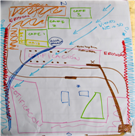
3 weeks pre-workshop. Guided Field Data Collection: Community Needs Assessments. Conduct a needs assessment with a target population in preparation for use in the nonprofit training workshop—guided through distance learning by CSDi staff. We will provide all of the tools and information you need to conduct the needs assessments.
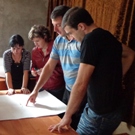
5 days. A Face-to-Face Nonprofit Training Workshop. Full Nonprofit Program Design and Development. Working with the CSDi workshop leader, you will use your needs assessment to begin the development of a complete, fundable, launchable project.
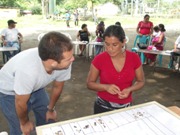
2 optional field days. Don't have community access? Two additional,optional field days the Saturday and Sunday prior to the workshop conducting a participatory needs assessment with our local partner at the nonprofit workshop location.
Completion Certificate. Receive a workshop completion certificate from the Center for Sustainable Development.
PHASE II: 12 weeks
Post-workshop: Enroll in OL 203 and OL 204 to form a project team, design capacity-building workshops and launch your nonprofit project.
OL 240 Certificate. Receive a certificate from the Center for Sustainable Development.
What you will get out of this full certificate program
Would your organization like to learn how to increase efficiencies and impact in their nonprofit programs? This four-month certificate program will provide a system of building block activities for you to use on the ground in developing, funding and implementing successful nonprofit programs. The techniques illustrated in these non profit training courses use a step-by-step progression to lead participants through problem assessment, project design and implementation. You will package your nonprofit project design components for enhancing donor communications.
design sustainable nonprofit programs from scratch in response to donor RFPs
work with a new team who have inherited a ready to launch project get up-to-speed quickly
get projects back on track which have encountered challenges
Nonprofit Projects and Programs.
If you work with a non profit on programs such as animal welfare, community development, the environment—or a food bank or homeless shelter—the Certificate Program 240 will help you develop sustainable, fundable, impact oriented non profit projects.
Non profit program effectiveness can be limited by non profit staff’s poor access to mission-critical information and non profit training. We deliver solutions by providing cutting-edge information, tools, time-saving templates, non profit training and expert consultancy through blending a face-to-face workshop with distance learning—and lead you in developing a real nonprofit project for your organization.
In a survey that I conducted recently respondents voted the following areas where they have the greatest need. You may face similar challenges:
Maybe you don't have enough fundraising ideas for all of the services you would like to provide
At times project impact has been low—and sustainability is elusive
Perhaps your staffing is low and you can't find enough time to get everything done
Sometimes non profit programs can be difficult to manage—sometimes they stall mid-term
It's possible that your donor communications need to be improved and targeted for better donor engagement
Become the Solution
Empower people in your communities to change their lives,
develop impact-oriented projects from the ground-up,
use proven methods that produce sustainable results,
attract donors, and
collaborate with course colleagues.
Where does one turn to for information on designing, launching, and managing well-designed nonprofit programs? For many staff members it may feel overwhelming to launch a new non profit project. Where do you begin? What practical tools are working today? Together, during our non profit training workshops we will explore the full process of developing solid nonprofit programs.
The program provides a system for staff to use in developing successful nonprofit projects and includes the tools and resources needed to:
assess and organize information about target populations
work with communities to develop long-term, sustainable nonprofit programs
Projects that participants have developed through the certificate program have included activities for the elderly, adaptation to climate change, alternative energy, bicycle paths, business skills training for immigrants, community development, conservation, elderly care facilities, food banks, community gardens, financial literacy, formation of a farmer's association, natural resource management, recycling, revitalization of an Iowa town, income generation, and vocational skills training.
"I just want to take this opportunity to complement you on the practical ideas, knowledge and vast experience that you continue to share with us on each assignment. Many times your examples are the solution of choice for our community. I have been provided with constant support, practical solutions suitable for my project, feedback specific to our project submissions (so we know Tim reads our assignments!) and unwavering encouragement.
"Tim and his online team are only an email away and based on my own experiences never failed to respond to my challenges, concerns, successes and queries. I know that my community members and I have benefited tremendously from our interaction with Tim and participation in the program. I do wish you continued success with your commitment and drive in providing excellent service, and valuable and practical knowledge." Gillian
Although most participants in our workshops for nonprofits are from North America or the U.K, we have had the pleasure of also working with non profit participants from: Australia, Austria, Belgium, Canada, Denmark, Finland, France, Germany, Hong Kong, Ireland, Israel, Italy, Japan, Monaco, the Netherlands, New Zealand, Norway, Singapore, Spain, and Switzerland.
What you will do
These nonprofit training workshops are not based upon lectures—they are based upon action. We will not be using case studies: Immediately before the live workshop you will have 3 weeks to facilitate a needs assessment with a real community where your organization works. In the live workshop, you will then develop the following tangible outputs, tools and techniques for your specific project based upon your community's assessment.
clearly assess need in a target community
develop a nonprofit project outline with a problem statement, underlying causes, and solution oriented activities
research activities that have worked to solve the non profit project challenge
develop project management documents: log frames, budgets and schedules
develop a Letter of Inquiry for a donor presentation
Real Non Profit Projects in Real Communities. OL 240 is for staff from non profit and donor organizations—and people interested in the non profit world. The certificate program leads participants in the process of developing empowered, sustainable communities. Participants learn to develop real non profit projects in real communities.
What is a Community? Examples of communities could be:
urban agriculturalists
teenagers visiting a teen drop-in center
people visiting a food bank
recent immigrants learning to navigate a new country and a new culture
members of a town developing a trail system in an adjacent wilderness area
community members and stakeholders living next to a marine protected area
members of a small town in Nebraska in the process of revitalizing it
citizens trying to fund a community health center
local farmers forming a marketing association
young families in need of day care
Methodology.
This is a blended learning workshop. During the three weeks prior to the five day workshop, guided by CSDi staff, you will conduct a needs assessment with a target population—in the community where you work—in preparation for the workshop. During the live workshop you will spend five days developing and fine-tuning a nonprofit project that will address the specific context that your community faces. At the end of the live workshop, in OL 203 and OL 204 you will return to work with your community—and launch your project— all under the continuing support and guidance of your CSDi workshop leader.
Facilitation
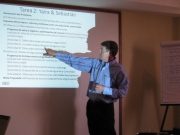
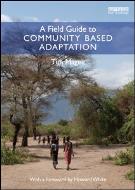
The workshop will be led by Tim Magee, CSDi’s Executive Director, who has over 30 years experience in both working with nonprofits and leading workshops for nonprofit organizations. Mr. Magee is the author of A Field Guide to Community Based Adaptation published by Routledge, Oxford, England, and The Beginner's Guide to Online Donations.
Resources
• We will provide access to a library of resources for the different challenges that you're likely to encounter: studies, manuals, guides, and community capacity building resources.• You will be able to download a full range of document templates for you to customize to best address your nonprofit project.• Course facilitators will work individually with you as consultants throughout the program in developing your specific project.
Summary of the Blended Non Profit Training Workshop
Pre-workshop
Field Assessment of Community Need
The goal of the nonprofit workshops is to guide you in developing a real nonprofit project for your target community. In the 3 weeks before the live workshop the workshop facilitator will guide you in leading a needs assessment with community members. We will provide handbooks and workshop lesson plans for leading the assessment.
The course facilitator will then work with you to refine the assessment into a simple problem outline that you will bring to the live nonprofit training workshop with you—and begin developing it into a full non profit project beginning on day one.
For workshop participants without community access:
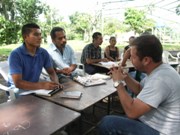
If you don't have access to a community for conducting a needs assessment, join us in the optional pre-workshop component and work with a local community on their needs assessment and nonprofit project outline development. The needs assessment will be conducted with a local partner near the workshop location.
Optional pre-workshop field days at workshop location
Saturday: 4 hours
Participatory needs assessment
• conduct a participatory needs assessment with our local workshop partner
Sunday: 4 hours
Develop a clear problem definition in preparation for Monday's workshop
• develop a problem outline including a problem statement, underlying causes—and their negative impacts
Five-Day Live Nonprofit Training Workshop Overview
MONDAY
Local knowledge of needs and solutions
• review the pre-workshop community needs assessmentsInformation on Potential Nonprofit Solutions
• research solution information for addressing community need• summarize nonprofit solution information
• complete a preliminary project outline reflecting community need and solution oriented activities
TUESDAY
Solution: Identify Sustainable Activities
• research evidence-based project activities• verify activity effectiveness through scientific evidence
• develop the program and activity solution list
WEDNESDAY
Non profit project tools: Management & funding for nonprofits
• develop a logical framework, detailed budget and a project schedule• participant project presentations
THURSDAY
• project summary: writing a compelling two page fact sheet (LOI)• how will you organize a donor presentation?• where will you find donors to present your nonprofit project to?Sustainability: Capacity Building
• community capacity building• selecting the first activity for a community capacity building workshop• two-way knowledge transfer: lesson plans
FRIDAY
Impact: Milestones into the Future
• nonprofit project monitoring and evaluation• develop a long-term project management plan for the community
Post-workshop
The Post-workshop Program will Link Theory and Practice
3 Simple Steps to Launch Your Project. Enroll in OL 203 and OL 204 and we will support you in launching the project with your community that you developed in the non profit training program. After the live workshop return to your community and the workshop facilitator will provide guidance, consultation, and resources—and will guide you in leading your first capacity building workshop with community members.
Requirements
You will only need to have functional knowledge of Word, Excel, email, and the Internet.
A laptop/netbook with Wi-Fi for use in the nonprofit training workshops.
There are no books to buy—all course materials are available on the course site.
Some of the assignments suggest doing them in a community. If impractical for you, partnering with a classmate in the field who does have community access will add depth to your experience.
Target participants
policymakers, administrators and officials at various governmental levels
practitioners such as planners and disaster risk managers at provincial and local levels
development students and postgraduate students who want to learn more about what works in designing nonprofit projects
donors, donor staff, nonprofit staff, grant writers, project managers, and executive directors
Nonprofit Training Workshop Fee
The workshop is US $1,250.00 per participant. This covers the 4 week blended non profit training fee (including the 5-day live workshop), resource materials, and guidance during the pre-workshop field components and lunches during the workshop. Participants will be responsible for their own travel expenses and arrangements such as airport transfers, food other than lunch, accommodation, health/accident insurance, and other personal expenses.
Optional 2-Day Field Course. Theoptional 2-day field course is $250.00 which covers the non profit training fee, resource materials, and snacks. This also covers transportation for the 2-day field course. Participants will be responsible for their own travel expenses and arrangements such as airport transfers, visa application fees where necessary, food, accommodation, health/accident insurance, and other personal expenses.
How to Enroll
Pre-training information will be provided to those accepted into the program and for whom we have received payment. Simply go to the Enrollment Page to fill out the Participant Application Form at the bottom of the enrollment page, and to pay by credit card. Please write us for bank transfer instructions: Online.Learning@csd-i.org.
Read our Workshop Terms and Conditions.
Nonprofit Training Workshop Completion Certificate
Workshop participants who successfully complete the workshop will receive a completion certificate. OL 240 Certificate participants who enroll in OL 203 and OL 204 and successfully complete the courses on time will receive an OL 240 Certificate. Your certificate will be e-mailed within 30 days of the end of your course.
Location
Claremont, California
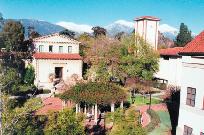
Claremont, located at the foot of the beautiful San Gabriel mountains, is 32 miles east of Los Angeles. It became a college town in the late 1880s with the founding of Pomona College; now there are nine colleges and graduate schools. Claremont, with its tree lined streets, is a walking town. Downtown Claremont ("The Village") boasts sidewalk cafes and a variety of shops and restaurants. Here is Claremont's Downtown Village Activities Guide.
Workshop Location. The workshop will be held at Pitzer College; the community assessment will be in partnership with their "Pitzer in Ontario" program—specifically their Huerta del Valle community garden project.
Getting to Claremont: SuperShuttle (as well as other shuttle services) provides service from both Los Angeles International Airport (50 miles) and from Ontario International Airport (9 miles).
Lodging: There are seven or eight hotels in the Claremont area in a range of prices.
Participant Quotes
I wish to extend our heartfelt gratitude for the knowledge addition in our careers, the time you take to correct our assignments.... This has opened doors for us to venture into designing our own projects, very sure we shall never go POOR. You've indeed taught us how to 'FISH not provided FISH'. Dianah.
I want to take this opportunity to express my thanks to you, and your staff for your continued support during the courses in the feedback and comments that enhances our work and for the opportunity to participate. I thank you all very much. Gillian.
Thank you for all your effort in putting together a great program and all of the program resources. Thank you for everything – for making this possible, for your guidance, and for your continuous optimism and encouragement. We are thankful for your guidance, for coming up with these courses that are relevant, and for your continuous optimism and encouragement. I look forward to the opportunity to work with you again in the next session. Wye Yee Yong
You have just made our day. Thank you for your usual prompt and generous reviews of our work. Your system is most effective. Helps us to do well. Thank you once again. We are grateful for your mentorship. Carolyn.
We are thankful for your guidance, for coming up with these courses that are relevant, and for your continuous optimism and encouragement. Wye Yee.
I just wanted to say how much I enjoyed the certificate program. It truly has helped me further develop my skill set. Meredith.
I'm so excited with the whole experience this non profit training has provided me. The interaction with the community, sharing their lives, their enthusiasm in participating and opening up to me – and with lots of hope in seeing me engage with them. George
This program was absolutely awesome! The course content, instruction, example projects, on-line resources and the most valuable – your timely guidance on the assignments were all perfectly done. Boris
What Students Think:
"As you know, as a real beginner in designing non profit projects, without your project example templates I could never have written even a single word by myself." Moise
"I wish to extend my heartfelt gratitude for the knowledge addition to our careers and the time you take to correct our assignments. This has opened doors for us to venture into designing our own projects, and I'm very sure we shall never go POOR. You've indeed taught us how to FISH—not provided FISH." Dianah
"I'm so excited with the whole experience this non profit training has provided me. The interaction with the community, sharing their lives, their enthusiasm in participating and opening up to me – and with lots of hope in seeing me engage with them." George
"This non profit training program is an absolute cracker. After undertaking the course, I was able to relate and transform community need into a project idea that could attract program funding. The exercise of transforming goals into a simple logical framework was particularly exhilarating and smooth. It was indeed an eye opener for me." Perry